The History of Twenty Mile: From Historic Florida to Nocatee
There are places where a neighborhood name is simply a name chosen by a developer.
Twenty Mile isn't one of them.
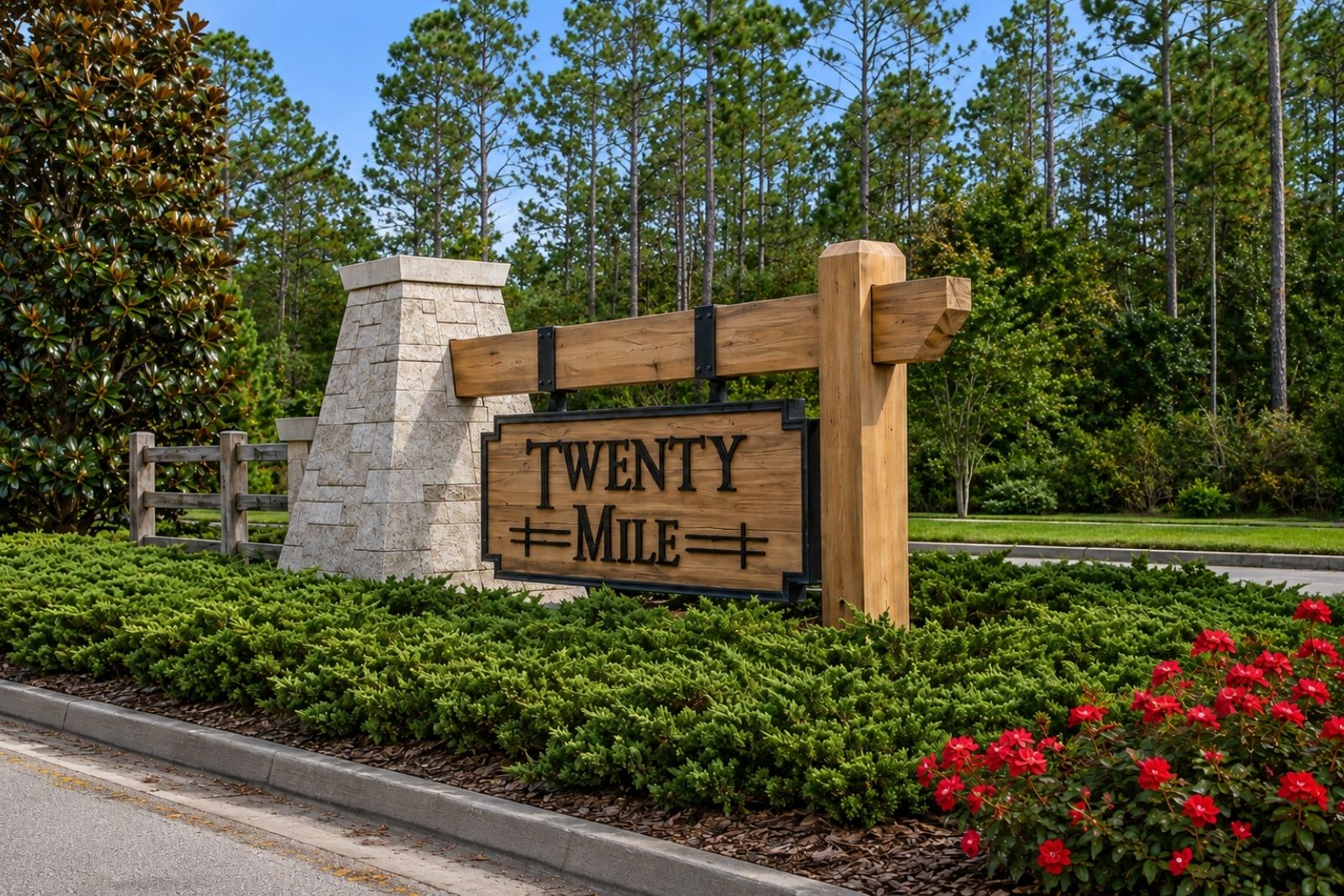
Long before Nocatee existed, people were traveling through the land we now know as Twenty Mile. Native Americans, Spanish soldiers, messengers, settlers, ranchers and timbermen all moved through or worked this part of Northeast Florida.
Today, Twenty Mile is one of the most distinctive areas of Nocatee, with sprawling oak trees, preserved forests, split-rail fencing, historic brickwork and neighborhoods intentionally designed to reflect an Old Florida character.
But once you know the history behind the name, many of those details start to mean something more.
Before There Was Twenty Mile
The history of this land begins long before Europeans arrived in Florida.
The Timucua people lived throughout Northeast Florida, where rivers, creeks, marshes and forests provided both resources and natural transportation corridors. Native American trails crossed this part of the state before there were roads connecting the settlements we recognize today.
That changed dramatically after the arrival of Europeans.
The French established Fort Caroline near the St. Johns River in 1564. A year later, Pedro Menéndez de Avilés established St. Augustine for Spain.
Those two settlements set the stage for one of the earliest and most significant conflicts in Florida's colonial history.
And Twenty Mile was right in between them.
Twenty Mile Was the Halfway Point
In 1565, Menéndez and his men traveled from St. Augustine toward Fort Caroline.
It was not an easy trip.
According to the history preserved by The PARC Group, traveling between St. Augustine and Fort Caroline meant crossing difficult, swampy terrain, and the journey took Menéndez and his men four days.
About halfway between the two destinations was the area that would eventually become known as Twenty Mile House.
As travel continued along the route, that halfway point became an important place to stop.
By the 1700s, Twenty Mile House served as a Spanish military outpost and way station, providing a resting place for soldiers and travelers as Spain and Britain struggled for control of Florida.
But it wasn't only a place to rest.
The route also served as an important communications link. Messages relating to the province's defense traveled between St. Augustine, Fort Caroline and St. Johns Bluff through this corridor.
One Place, Many Names
Over several centuries, the site became known by a surprising number of names.
The historical record cited in The PARC Group's Twenty Mile history includes:
Twenty Mile House • Twenty Mile Station • Twenty Mile Settlement • Twenty Mile Post • Halfway House • Veinte Millas House • La Casa De Los Dragones
That list contains a name Nocatee residents will recognize immediately: Twenty Mile Post.
And that's one of the ways the history of this land was eventually carried forward into modern Twenty Mile.
Florida Changed Hands. Twenty Mile Remained.
The land surrounding Twenty Mile witnessed centuries of change.
Florida moved between Spanish and British control before eventually becoming a United States territory in 1821. Governments changed, settlements grew and transportation routes evolved.
Twenty Mile House itself eventually disappeared.
But the location remained part of the story of Northeast Florida, and over time this once-remote landscape transitioned into ranch and timber country.
That's where the next chapter of the Twenty Mile story begins.
From Historic Florida to Dee Dot Ranch
In 1954, James Ellsworth "J.E." Davis, one of the four brothers who founded Winn-Dixie, purchased property in this area known as The Haunt of the Hermit from James Stockton.
That property became part of Dee Dot Ranch, named for Davis's children, Dano and Dorothy.
The ranch eventually encompassed approximately 51,000 acres across southeastern Duval and northeastern St. Johns counties, and the southernmost portion included the historic Twenty Mile House site.
The land was used for ranching, hunting and forestry, and much of it remained remarkably undeveloped as Northeast Florida grew around it.
The Davis family's ownership of this enormous tract would eventually become part of the much larger story of Nocatee. We explore that transformation separately in The History of Nocatee: How a Vision Became a Community.
For Twenty Mile, what matters is that the history of the land wasn't forgotten when development finally arrived.
It became part of the identity of the community.
Twenty Mile at Nocatee
When The PARC Group began developing Twenty Mile, the goal wasn't to make this part of Nocatee look like every other neighborhood.
The existing landscape provided the inspiration.
Large oak trees, Spanish moss, split-rail fencing, preserved natural areas and rustic Old Florida details became defining features of Twenty Mile. PARC's own description of the area emphasized its historic character and the thousands of acres of preserved forest and wetlands surrounding the neighborhoods.
And some of the history wasn't simply referenced.
It was physically incorporated into the community.
Where You Can Still See the History Today
This may be our favorite part of the Twenty Mile story.
You don't have to read a history book to find connections to the area's past. Once you know what you're looking for, there are reminders of it throughout Twenty Mile.
Twenty Mile Post
Today's Twenty Mile Post carries forward one of the historical names associated with Twenty Mile House.
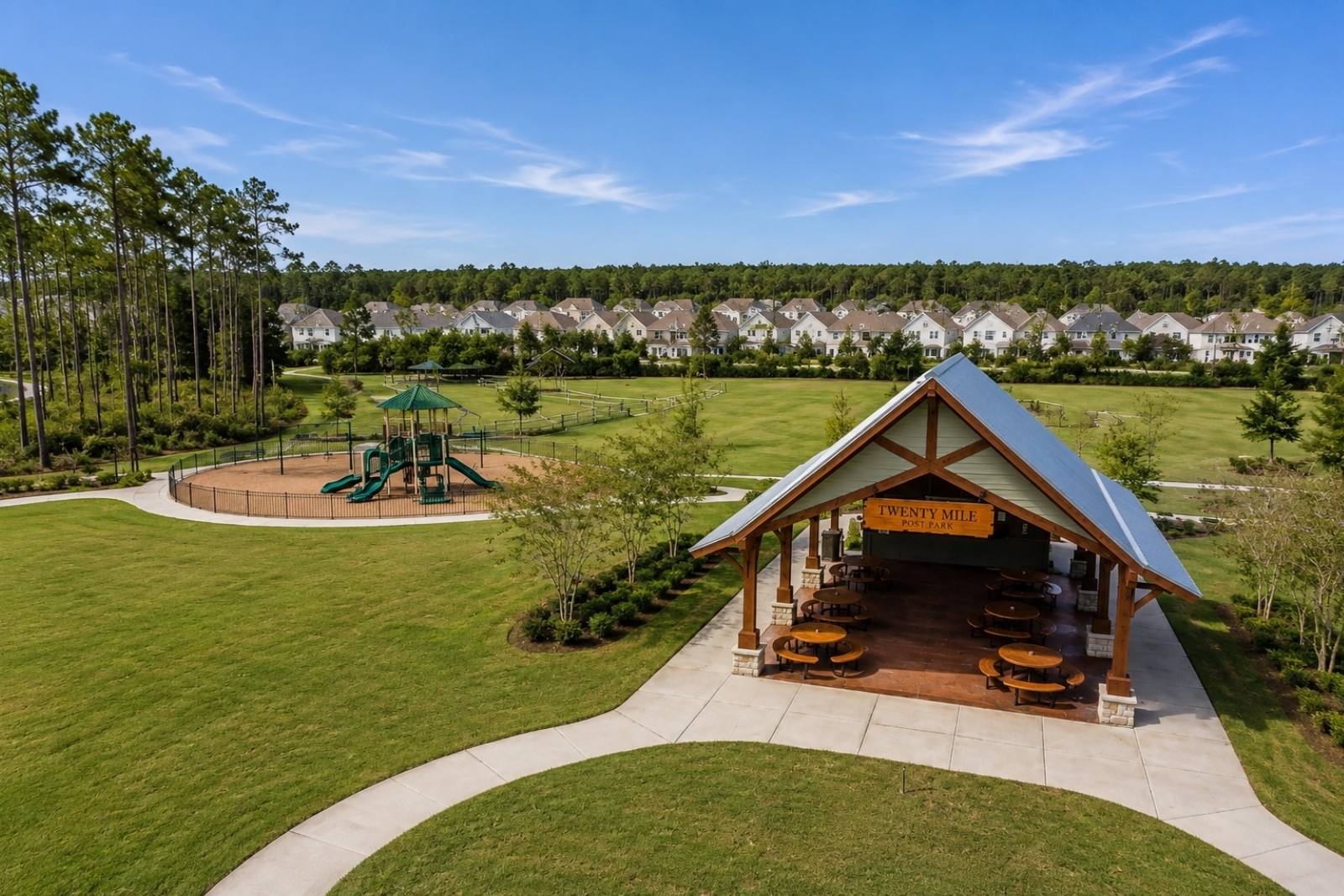
The modern Twenty Mile Post is a Nocatee amenity located at the entrance to The Crossing at Twenty Mile. Its rustic finishes and split-rail fencing were designed to complement the historic character of the surrounding area. The park includes a covered pavilion, playfield, dog park, playground and nature trail.
We haven't found documentation saying that today's pavilion sits on the exact footprint of the original Twenty Mile House, so we don't make that claim.
But the name itself is absolutely rooted in the history.
Twenty Mile Post was one of the historical names used for Twenty Mile House centuries before Nocatee existed.
It's a small connection between the place travelers once stopped along their journey and the community occupying the land today.
Look Down at the Bricks
Here's another detail that's very easy to miss.
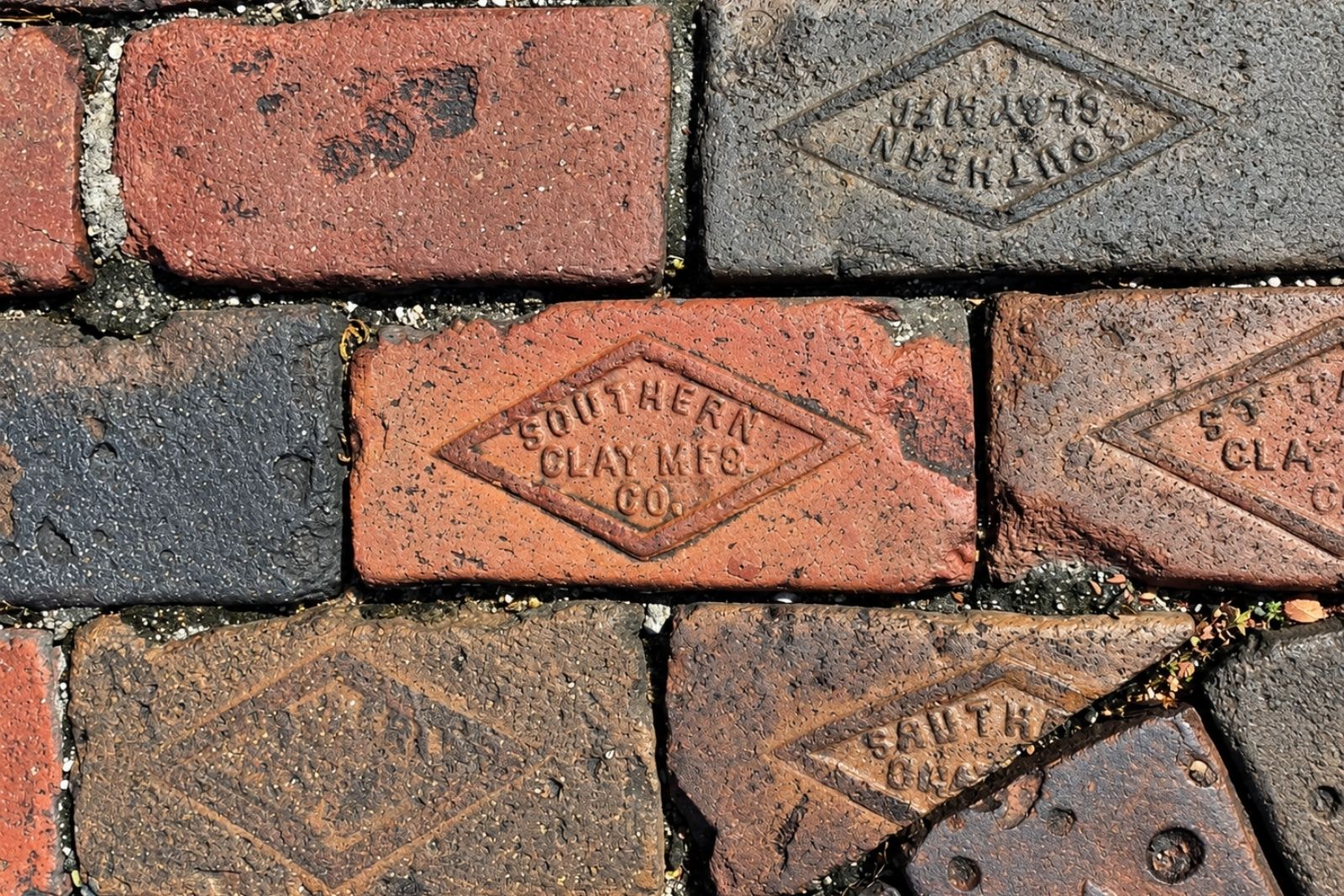
The rustic bricks you'll see incorporated into the entrances of the Twenty Mile neighborhoods and at Twenty Mile Park aren't reproduction bricks selected because they looked old.
They're actual preserved bricks from historic County Road 210, known today in this area as Palm Valley Road.
After the Intracoastal Waterway was completed in 1908, brick was laid along what had previously been a dusty CR 210.
The old brick road survived for decades before CR 210 and the Palm Valley transportation corridor were modernized. In 2002, the brick roadway was dismantled.
But the bricks didn't all disappear.
The PARC Group preserved some of them and incorporated the historic bricks into Twenty Mile as a way of preserving a physical piece of the area's past.
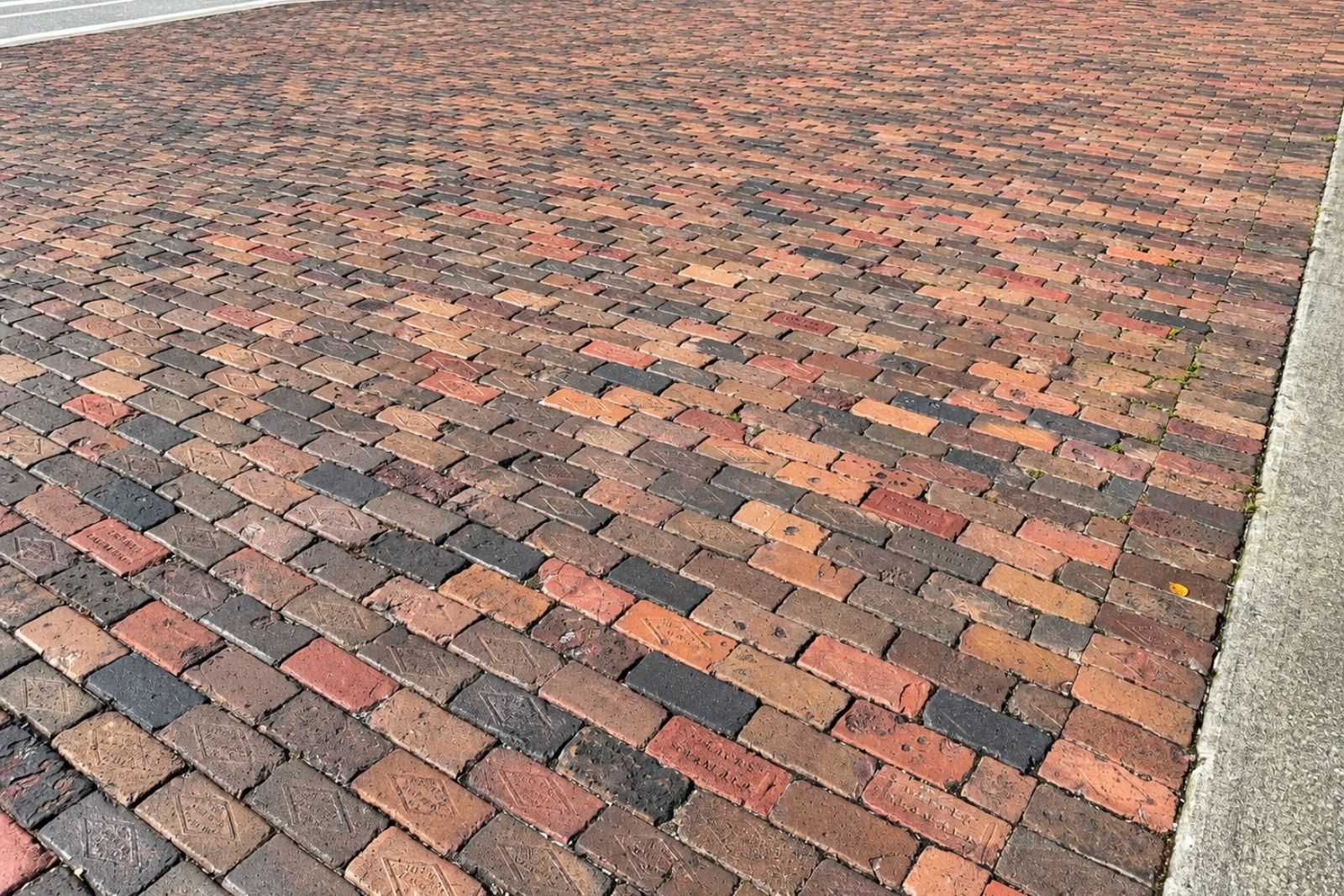
And here's the part I love: look closely.
Some of the individual bricks still carry the marks of the companies that manufactured them. Southern Clay MFC Co. is stamped into bricks within the pavement, giving you another tangible connection to the old roadway beneath your feet.
Thousands of people have probably walked or driven across these bricks without knowing what they are.
Once you know the story, you tend to notice them every time.
Twenty Mile Park and the Old Florida Landscape
The trees tell part of the story, too.
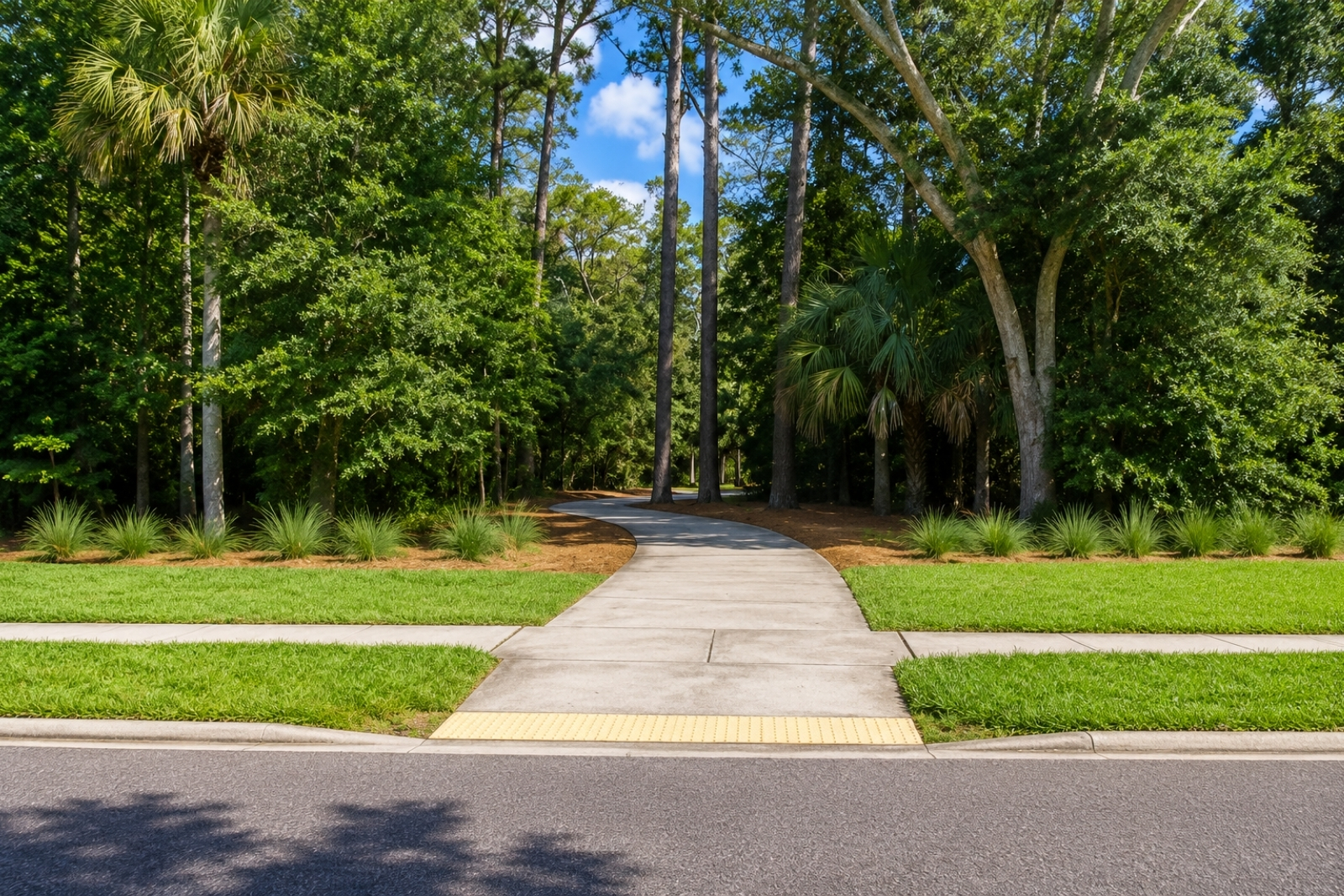
Twenty Mile Park was carved into the natural landscape at the front of Twenty Mile Village. Instead of clearing away the area's character, sprawling oak trees, Spanish moss and the surrounding natural environment became part of the park setting.
The park was constructed and funded by The PARC Group and donated to the Tolomato Community Development District, making it available to Nocatee residents rather than functioning as a private amenity belonging only to Twenty Mile Village.
The preserved trees, rustic fencing, old CR 210 bricks and historically inspired names work together to give Twenty Mile an identity that feels different from other parts of Nocatee.
And much of that is intentional.
Twenty Mile Isn't One Neighborhood
This is important if you're considering buying a home here.
Twenty Mile is an area of Nocatee, not a single neighborhood.
Its individual neighborhoods were developed at different times and offer very different home and homesite experiences.
The first Twenty Mile neighborhoods began taking shape in 2014, and additional communities followed as this part of Nocatee grew. By 2016, The Hammock, The Vista and The Ranch were among the new neighborhoods being added to the area.
Today, when a buyer tells us, "We really like Twenty Mile," that's actually the beginning of the conversation.
We still need to figure out which Twenty Mile neighborhood fits what they're looking for.
The Homesites Are Part of the Appeal
One of the things buyers tend to notice when we drive into Twenty Mile is the amount of natural landscape.
But it's important not to turn that into a blanket statement that every home in Twenty Mile has a huge wooded lot.
They don't.
You'll find lakefront homesites, preserve settings, interior lots, homes backing to other homes and properties with considerably more privacy and separation.
Some sections have larger homesites than others. Some neighborhoods feel more intimate. Others have a stronger connection to Twenty Mile Park or the surrounding preserve.
That matters when you're buying here.
It also matters when you're selling.
Two otherwise similar homes can feel very different depending on the lot, rear view, tree coverage, orientation and surrounding properties.
This is one of those places where the homesite deserves almost as much attention as the house.
Twenty Mile's Location Is Different, Too
Twenty Mile sits on the northern side of Nocatee, closer to Palm Valley and the Intracoastal than neighborhoods farther south in the community.
It is also one of the Nocatee areas with particularly convenient access toward Mickler's Landing beach.
For some buyers, that location is a major part of the appeal.
For others, being closer to Town Center or another part of Nocatee matters more.
Neither is necessarily better.
It's one of the reasons we've built our Nocatee neighborhood collection area by area rather than treating all 49 neighborhoods as interchangeable.
A Piece of Twenty Mile's Past You Can Still Experience
The original Twenty Mile House is gone.
The soldiers and messengers who traveled through this land centuries ago could never have imagined the neighborhoods that would eventually stand here.
But Twenty Mile didn't completely erase what came before it.
The name is historic.
Twenty Mile Post carries forward one of the names once used for the old outpost.
Bricks that once formed CR 210 are incorporated into the community today.
And many of the mature trees and natural areas that give Twenty Mile its character remain part of the landscape.
That's what makes this history particularly interesting to us.
Twenty Mile wasn't given an old-fashioned name to create a story.
The story was already here.
Once you know it, driving beneath those oak trees feels just a little different.
Frequently Asked Questions
Why is it called Twenty Mile?
The name comes from the historic Twenty Mile House, a military outpost and way station located roughly halfway along the difficult journey between St. Augustine and Fort Caroline. Travelers and soldiers used the location as a resting point, and it became known by several names over the centuries, including Twenty Mile House and Twenty Mile Post.
Was Twenty Mile House a military outpost?
Yes. The PARC Group describes Twenty Mile House as a Spanish military outpost and way station during the 1700s. It also served as part of a communications route used to deliver messages relating to the defense of the province.
Are the old bricks in Twenty Mile really from CR 210?
Yes. According to The PARC Group's history of Twenty Mile, preserved bricks incorporated into the area came from historic County Road 210, now known in this area as Palm Valley Road. Some still carry visible manufacturer's marks, including Southern Clay MFC Co.
Was Twenty Mile part of Dee Dot Ranch?
Yes. The historic Twenty Mile House site was located within land that eventually became part of Dee Dot Ranch. J.E. Davis purchased property known as The Haunt of the Hermit in 1954, and Dee Dot Ranch ultimately encompassed approximately 51,000 acres.
Is Twenty Mile one neighborhood?
No. Twenty Mile is a larger area within Nocatee containing multiple individual neighborhoods. Homes, builders, homesite sizes and settings vary throughout the area.
Are Twenty Mile Park and Twenty Mile Post only for Twenty Mile residents?
No. Twenty Mile Park was constructed by The PARC Group and donated to the Tolomato Community Development District for use by Nocatee residents. Twenty Mile Post is also described by Nocatee as one of the parks and amenities available to Nocatee residents.
Continue Exploring Nocatee
Explore Nocatee's 49 Neighborhoods
See how Nocatee is organized into eight areas and find the neighborhoods that fit the way you want to live.
Search Homes for Sale in Nocatee
Browse current Nocatee listings and see what's available across the community.
Download the Nocatee Community Real Estate Guide (coming soon)
Get our comprehensive Nocatee resource for understanding the neighborhoods, amenities and real estate throughout the community.
Curious what your Nocatee home is worth? Request a complimentary home value consultation and learn how today's market may impact your home's value. Call 904.826.3690
Whether you're just beginning your research, planning your next move, or have proudly called Nocatee home for years, we're here to help every step of the way.
Nocatee Real Estate Market Trends, Prices & Insights
See what's happening in the Nocatee housing market, including pricing, inventory and trends buyers and sellers should understand.Nocatee Greenway Trails
Explore Nocatee's greenway trails, multi-use paths and the outdoor connections that wind through the community.Nocatee Wildlife | What Animals You'll See Living in Nocatee
Learn about the deer, birds, gopher tortoises, alligators and other wildlife you may encounter living in Nocatee.Schools in Nocatee for Families Relocating
Understand the schools serving Nocatee, how zoning works and what relocating buyers should know before choosing a neighborhood.What's It Really Like Living in Nocatee? A Resident's Perspective
Go beyond the amenities and real estate to see what everyday life in Nocatee is really like from a longtime resident's perspective.Why We Chose Nocatee: Our Family's Story
Read how we first discovered Nocatee, eventually made it home and watched the community grow while raising our family here.Nocatee Dog Parks & Pet-Friendly Living
Explore Nocatee's dog parks, trails and outdoor spaces, plus practical considerations for living here with pets.The History of Twenty Mile in Nocatee
Go back before today's neighborhoods to discover the history of the land, Dee Dot Ranch and the story behind the name Twenty Mile.Nocatee HOA & CDD Fees Explained | What Every Buyer Should Know
Understand how Nocatee's HOA and CDD fees work, what they help support and what buyers should compare between neighborhoods.History of Nocatee, Florida: How the Community Developed
Follow Nocatee's evolution from its original master plan through the development of Town Center, amenities and 49 neighborhoods.Nocatee Amenities: What It's Really Like to Live Here
Explore the water parks, neighborhood pools, fitness, trails, events and recreation that make up Nocatee's extensive amenity system.Nocatee Landing: Where Nocatee Meets the Intracoastal
Explore Nocatee Landing, with kayak and paddleboard access to the Intracoastal, waterfront views, and a connection to the Nocatee Preserve.